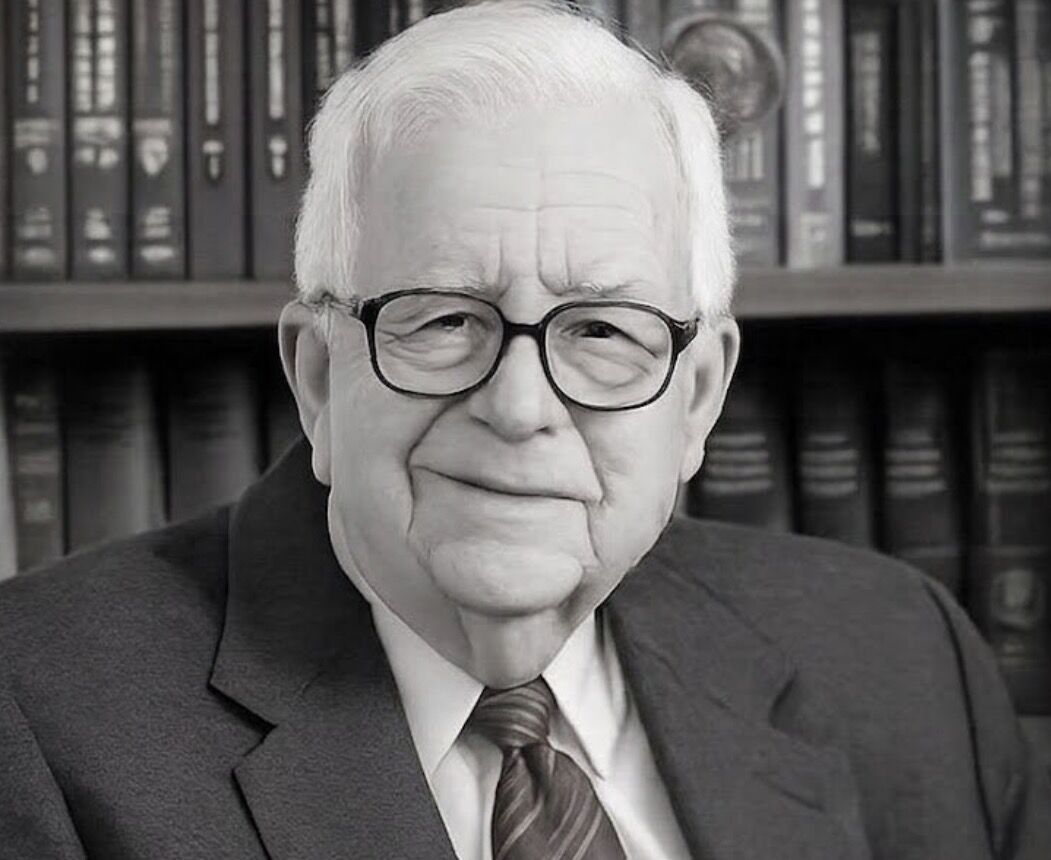
Who was Dr. Eugene Braunwald?
Dr. Eugene Braunwald was an Austrian-born American cardiologist, physician-scientist, educator and academic leader whose name became closely associated with the rise of modern cardiology. He was born in Vienna, Austria, on August 15, 1929, and died on April 22, 2026, at the age of 96.
For many people searching “Who was Dr. Eugene Braunwald?”, the answer begins with his extraordinary influence on heart medicine. He was widely regarded as one of the leading figures in cardiovascular science, particularly for his work on heart failure, acute myocardial infarction, hypertrophic cardiomyopathy and large-scale clinical trials.
Braunwald’s career was not limited to one hospital, one textbook or one research field. His work changed the way cardiology was studied, taught and practiced across the world.
From Vienna to the United States: a life shaped by history
Eugene Braunwald was born in Vienna, Austria. His early childhood was marked by one of the darkest chapters of European history. After the Nazi occupation of Austria, his family fled the country, eventually reaching the United States.
That migration became one of the defining turns of his life. Braunwald would later build a career in American academic medicine, but his story began with displacement, uncertainty and survival.
This background gives his biography a deeper dimension. He was not simply a successful physician who rose through elite institutions. He was a refugee child who became one of the most respected names in global medicine.
Education and early medical training
Braunwald received his undergraduate and medical education at New York University, earning his medical degree in 1952. He later trained at Johns Hopkins, one of the most important medical centers in the United States.
His early professional years came at a time when cardiology was rapidly changing. Physicians were beginning to understand the heart not only through symptoms and bedside examination, but also through physiology, imaging, catheterization, pharmacology and laboratory research.
Braunwald entered medicine at precisely that turning point. He became part of a generation that helped transform cardiology from a largely descriptive field into a modern scientific discipline.
How did Eugene Braunwald become famous?
Dr. Eugene Braunwald became known through his pioneering research on the function of the heart, heart failure, coronary artery disease and myocardial infarction. His work helped explain how the heart responds under stress, how heart muscle fails, and how physicians could better understand acute cardiac events.
One of his important contributions was in hypertrophic cardiomyopathy. Alongside collaborators, he helped define this condition as a distinct clinical entity, giving doctors a clearer framework for diagnosis and treatment.
His influence also grew through leadership. Braunwald held major academic and clinical posts, including senior roles at the National Heart, Lung and Blood Institute, the University of California, San Diego, Harvard Medical School and Brigham and Women’s Hospital.
These positions made him more than a researcher. They made him a builder of institutions, a trainer of physicians and a central architect of modern cardiovascular medicine.
The TIMI Study Group and the era of evidence-based cardiology
One of Braunwald’s most important legacies was the creation of the TIMI Study Group in 1984. TIMI stands for Thrombolysis in Myocardial Infarction, and the group became one of the world’s most influential cardiovascular research organizations.
Through TIMI, Braunwald helped usher cardiology into the age of large, carefully designed clinical trials. These studies examined treatments for heart attack, blood clots, coronary artery disease, cholesterol-related risk and other major cardiovascular problems.
This was a decisive change. Modern medicine depends on evidence, not instinct alone. Braunwald understood that new treatments had to be tested rigorously before they became part of daily practice.
Because of this approach, his influence reached far beyond academic journals. It entered emergency departments, intensive care units, cardiology clinics and medical guidelines around the world.
Braunwald’s Heart Disease and his role as a teacher
For generations of doctors, Eugene Braunwald was also the name attached to one of the most important textbooks in cardiology: Braunwald’s Heart Disease. The book became a major reference for medical students, residents, cardiology fellows and practicing physicians.
His impact as an educator was enormous. He helped organize complex cardiovascular knowledge into a form that doctors could learn, apply and pass on.
This part of his career is crucial. Some physicians are remembered for a discovery. Others are remembered for training future doctors. Braunwald belonged to the rare group that did both.
His editorial and teaching work helped shape the language of cardiology. Many physicians around the world encountered his thinking long before they ever read his research papers in detail.
Academic leadership at Harvard and Brigham and Women’s Hospital
Braunwald spent a major part of his career at Harvard Medical School and Brigham and Women’s Hospital in Boston. There, he played a leading role in building one of the strongest academic cardiology environments in the world.
His leadership style combined scientific ambition with clinical seriousness. He encouraged physicians to ask questions that mattered at the bedside and then pursue those questions through disciplined research.
This is one reason his influence lasted for decades. He did not only publish his own work. He helped create a culture in which other researchers, clinicians and trainees could produce important work as well.
Awards, honors and global recognition
Dr. Eugene Braunwald received many major honors during his lifetime. He was recognized by leading medical organizations for his contributions to cardiology, heart failure, coronary syndromes and medical education.
He was also regarded as one of the most cited and influential cardiovascular physicians of his generation. His research papers, textbooks, lectures and institutional leadership gave him an unusually wide reach.
Yet the real measure of Braunwald’s importance is not only in awards or publication numbers. It is in the way his ideas became part of routine medical thinking.
When a doctor evaluates heart failure, treats a patient after a heart attack, considers evidence from a major trial or studies cardiology from a standard textbook, Braunwald’s legacy is somewhere in the room.
What was Dr. Eugene Braunwald’s lasting impact?
Dr. Eugene Braunwald’s lasting impact lies in the bridge he built between research and patient care. He helped move cardiology toward a more scientific, evidence-based and globally connected discipline.
He showed that the heart could be understood not just as an organ that beats, but as a complex system shaped by pressure, muscle function, oxygen demand, vascular disease, inflammation and treatment response.
His work also changed medical education. Through textbooks, mentorship and academic leadership, he influenced countless physicians who would go on to treat patients, conduct research and lead medical institutions.
A life that changed the language of heart medicine
Dr. Eugene Braunwald’s life story carries the weight of both history and science. Born in Vienna, displaced by war and later rooted in American medicine, he became one of the defining figures of global cardiology.
His death at 96 marked the end of an extraordinary career, but not the end of his influence. The methods, concepts, institutions and educational tools he helped build remain part of modern heart medicine.
For anyone asking who Dr. Eugene Braunwald was, the answer is clear: he was a physician-scientist who helped teach the world how to understand the human heart.